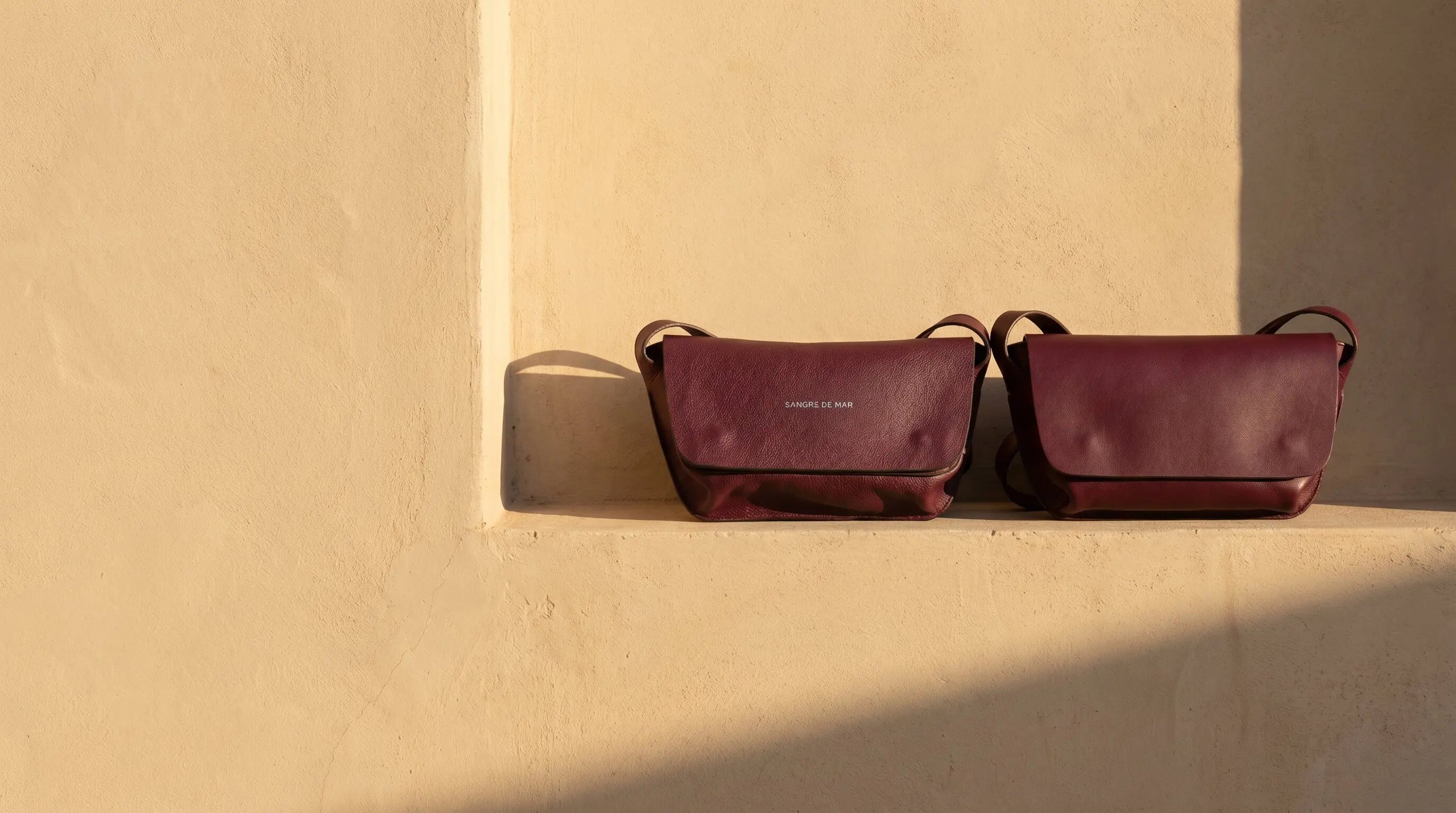
Sangre de Mar · Understated Rebellion: A Manifesto
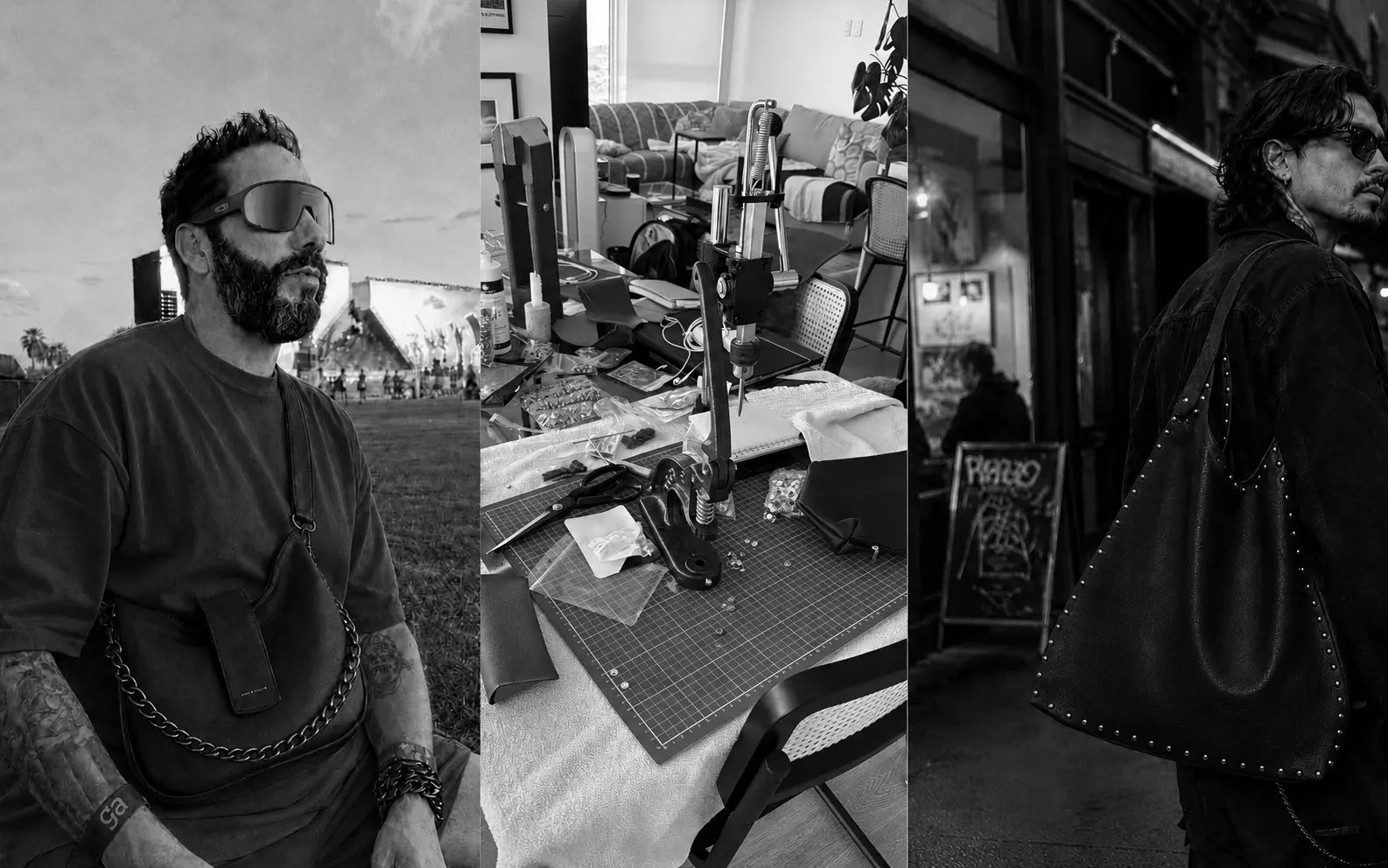
Tuesday afternoon. The light slants in through the window in New Westminster, catches the cutting mat on the dining table, lands on a navy Sienna bag waiting on its side. The press is set up where dinner usually sits. A small dish holds matte silver studs. Each one will be pressed into the leather by hand — one at a time, along the edge seam, exactly where it should go.
This is how a small rebellion gets made.
The bag came from a workshop in Mexico, stitched by skilled artisans with decades of leatherworking behind them. It would be a beautiful piece on its own. But it would also be the same as a hundred other beautiful pieces in a hundred other stores. The studs are what make it Sangre de Mar. The studs are why it costs what it costs. The studs are the founder's hand, applied to factory standard, deliberately deviating from it.
That deviation is the brand.
What "understated rebellion" means
A founder finishes selected pieces by hand. A customer chooses a small Mexican-Canadian leather brand over Coach because her eye trusts itself. A woman in a cream linen dress walks through a market with a hand-finished wallet at her chest — and the wallet has a snake-embossed back nobody sees until she turns. A man in an oversized bone tee carries a hair-on-hide fringe bag at a festival, where the fringe catches the wind and everyone notices something is different even though they can't quite say what.
None of this is loud.
Understated rebellion is what it sounds like. Refined and well put together on the surface, with a secretly naughty, free-spirit soul that shows up from time to time. It's a way of choosing. It's the woman who walked past the obvious luxury name and recognized something quieter, more particular, more her. It's the man who decided his bag could be both fringe and full-grain, both edge and elegance, without explaining himself.
It is not loud rebellion. It is not the streetwear hype, the dropped capsule, the limited edition with the loud logo. It is the choice you make that nobody else sees at first — until you turn the wallet over, or carry the bag close, or someone catches the silver stud catching the light.
Where it comes from
Sangre de Mar is shaped by a longer arc than the years it has existed as a company. Mexico City taught me textile design and the discipline of real craftsmanship. Years in the fashion industry at H&M, Grupo Julio, and Zara taught me how brands scale and what they sacrifice when they do. Years in tech at Hootsuite and Axon taught me to think in systems. The CDMX rave scene of the nineties taught me where I actually live — in the underground, in the electronic, in the warehouse hours when the city's loudest people quietly choose to dance.
Today the brand lives in New Westminster, finished between consulting calls and weekend nights at East Vancouver warehouses. Mexico is still where the leather is born. Vancouver is where it's finished, by hand, selected pieces at a time.
The brand carries both.
How it's made
Every Sangre de Mar piece moves through one of three tiers.
**La Casa** is the foundation — base pieces made in workshops in Mexico, curated and finished by us, accessible enough to enter the brand without ceremony.
**La Mano** is the founder's hand — selected pieces touched directly by Alejandro at the dining table. Silver studs, edge work, custom hardware applied one piece at a time. Limited per drop.
**La Firma** is the original — pieces conceived and directed by Alejandro and brought to life by skilled artisans in Mexican workshops. Where the brand earns its premium and concentrates its creative investment.
Three tiers, one ladder. Curated to founder-finished to original. Mexican craft, founder twist.
The promise
Sangre de Mar is for people who choose understated rebellion over loud trends. Mexican craftsmanship over fast fashion. Selected pieces over endless restocks. Refined and well put together on the surface, with a soul that shows up from time to time — at a festival, on a market afternoon, the moment a wallet turns over and reveals its texture.
That is the whole brand.
It is only just beginning.
— Alejandro Miramontes
New Westminster